
The Future of AI-Driven SaaS: Building Autonomous Products in 2026
The landscape of Software as a Service (SaaS) is undergoing a profound transformation, driven by the relentless advancement of Artificial Intelligence. While AI has long enhanced SaaS offerings, 2026 marks a pivotal shift towards true autonomy, where products not only assist users but proactively learn, adapt, and self-optimize to deliver value with minimal human intervention. This evolution isn't merely about automation; it's about creating intelligent systems capable of perceiving, reasoning, planning, and executing actions in complex, dynamic environments. For developers and product strategists at MindsCraft, understanding and harnessing this shift is paramount to building the next generation of category-defining SaaS.
Defining Autonomy in the Context of SaaS
True autonomy in AI-driven SaaS extends beyond simple task automation. It encapsulates several key characteristics:
Self-Monitoring: Products continuously observe their own performance, user behavior, and environmental changes.
Self-Diagnosis: They can identify issues, anomalies, or suboptimal patterns within their operations or user interactions.
Self-Optimization: Based on diagnoses, they automatically adjust parameters, reconfigure workflows, or deploy new models to improve efficiency, performance, or user experience.
Self-Healing: The ability to detect and autonomously resolve operational errors, security vulnerabilities, or infrastructure failures.
Self-Learning/Self-Improvement: Continuously ingesting new data, fine-tuning models, and updating decision-making logic to enhance capabilities over time, often leveraging reinforcement learning or active learning paradigms.
By 2026, these characteristics will be foundational, moving from aspirational features to expected capabilities in leading SaaS platforms.
The Technical Pillars of Autonomous AI-Driven SaaS
Building truly autonomous products requires a sophisticated fusion of advanced AI techniques, robust data engineering, and cutting-edge MLOps practices.
1. Advanced Machine Learning Models and Architectures
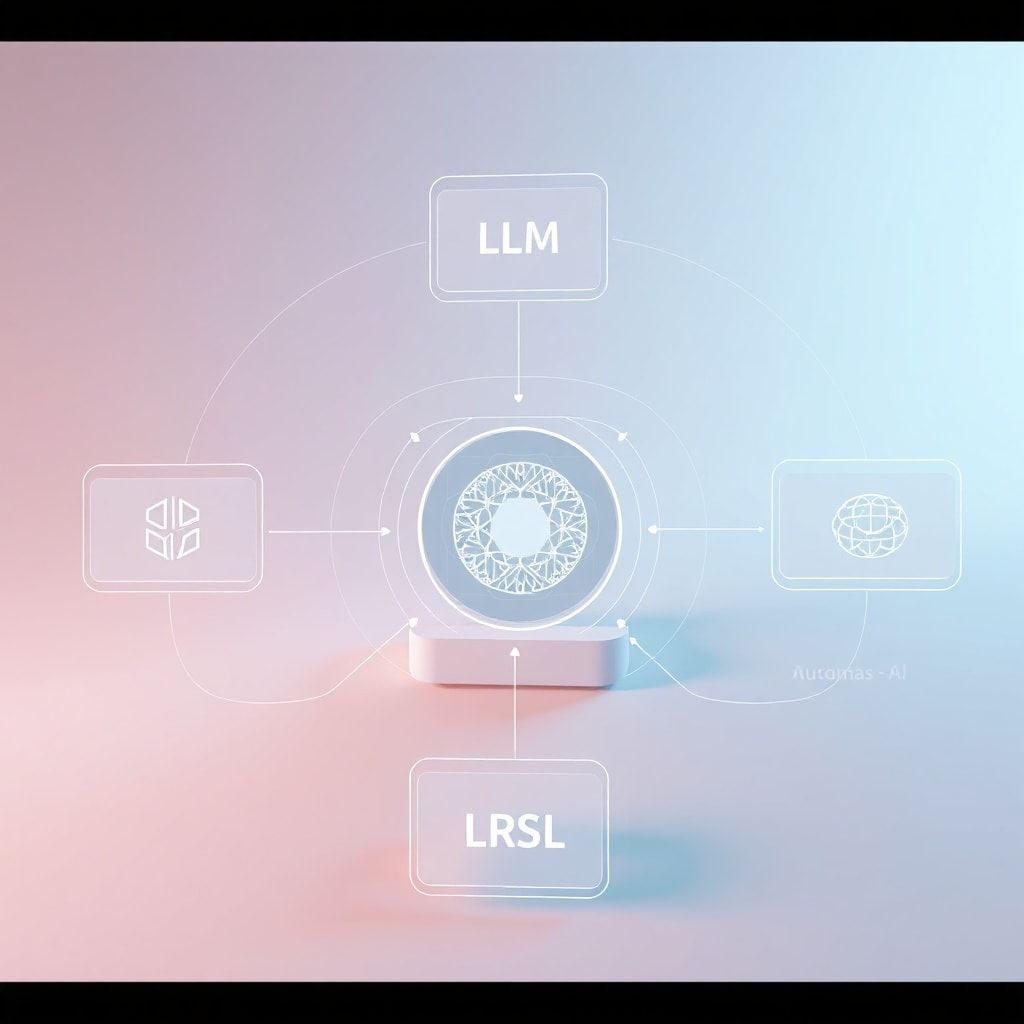
Generative AI and Large Language Models (LLMs): Beyond content generation, LLMs like GPT-4 (or its 2026 successors) will serve as the cognitive core for reasoning, decision-making, and dynamic task orchestration. They can interpret complex user intent, generate actionable plans, and even write or refine code for system adaptations.
Reinforcement Learning (RL): Critical for self-optimization. RL agents learn optimal policies through trial and error within simulated or real-world environments, enabling systems to dynamically adjust pricing, recommendation algorithms, resource allocation, or marketing campaigns based on desired outcomes.
Causal AI and Explainable AI (XAI): As autonomy increases, understanding why a system made a particular decision becomes vital. Causal inference models will help disentangle cause-and-effect relationships, while XAI techniques (e.g., SHAP, LIME) will provide transparency and auditability, crucial for debugging and regulatory compliance.
Multi-Agent Systems: Complex autonomous SaaS will likely be composed of multiple specialized AI agents collaborating. For instance, one agent optimizes database queries, another manages user interfaces, and a third handles customer support, all coordinated by a meta-controller.
2. Robust Data Engineering and Real-time Processing
Autonomy thrives on data. Real-time data ingestion, transformation, and feature engineering pipelines are non-negotiable.
Stream Processing Frameworks: Technologies like Apache Kafka, Flink, and Spark Streaming will be standard for processing high-velocity data streams from user interactions, system logs, sensor data, and external APIs.
Feature Stores: Centralized, versioned repositories for machine learning features ensure consistency, reusability, and low-latency access for both training and inference, accelerating model development and deployment.
Data Observability and Quality: Automated data quality checks, anomaly detection in data streams, and robust data lineage tracking are essential to maintain the integrity of inputs to autonomous systems.
3. MLOps and Automated Lifecycle Management
Operationalizing autonomous AI requires a maturity in MLOps that automates every stage of the machine learning lifecycle.
Continuous Integration/Continuous Delivery (CI/CD) for ML: Automated pipelines for model training, testing, versioning, deployment, and rollback. This includes infrastructure as code for reproducible environments.
Model Monitoring and Retraining: Continuous tracking of model performance (drift detection, bias detection, fairness metrics) and automated retraining triggers to adapt to concept drift or performance degradation.
Experimentation Platforms: A/B testing and multi-armed bandit approaches integrated directly into the product lifecycle to systematically evaluate and deploy new autonomous capabilities.
# Simplified MLOps pipeline concept for autonomous model updates.pseudo_code_example = """def autonomous_model_update_pipeline(): data = fetch_realtime_data_stream() if detect_data_drift(data): notify_human_operator("Data drift detected. Review needed.") return # Or trigger a more aggressive auto-correction model_performance = monitor_model_metrics() if model_performance < THRESHOLD or detect_concept_drift(data, model): new_model_candidates = train_new_models(data) best_model = evaluate_models(new_model_candidates, validation_set) if best_model.performance > current_model.performance: deploy_model_shadow_mode(best_model) if observe_shadow_performance_stable(best_model): promote_model_to_production(best_model) log_model_version(best_model) else: rollback_to_previous_model() else: log_no_improvement()"""print(pseudo_code_example)Architectural Blueprints for Autonomous SaaS
An autonomous SaaS platform in 2026 will likely adopt a modular, event-driven architecture to facilitate dynamic adaptation and resilience.
Intelligent Agent Core: The central decision-making unit, potentially powered by an LLM-orchestrated multi-agent system, responsible for interpreting goals, generating plans, and coordinating actions.
Perception Layer: Components that continuously gather and process data from various sources (user inputs, system logs, external APIs, IoT sensors) to build a comprehensive understanding of the operational context.
Action Layer: A set of API-driven services that the intelligent agent can invoke to execute changes within the SaaS product or interact with external systems. This layer might include services for UI updates, database modifications, email sending, or API calls to third-party integrations.
Feedback Loop and Learning Engine: Captures the outcomes of actions, user feedback, and environmental responses to continuously inform and improve the intelligent agent's models and decision-making policies.
Human-in-the-Loop (HITL) Interface: While autonomous, critical decisions or ambiguous situations will require human oversight. This interface provides transparency, override capabilities, and mechanisms for human experts to refine AI behavior.

Transformative Use Cases in 2026
The implications of autonomous AI-driven SaaS will reshape industries:
Self-Optimizing Marketing Platforms: Automatically design, launch, and refine campaigns, personalize content in real-time, adjust bidding strategies, and optimize budget allocation across channels to maximize ROI without constant human tuning.
Proactive Cybersecurity: AI agents that not only detect threats but autonomously remediate vulnerabilities, isolate compromised systems, and harden defenses in real-time, often before human intervention is possible.
Intelligent Supply Chain Management: Autonomous systems predicting demand fluctuations, optimizing inventory levels, rerouting logistics in response to disruptions, and even negotiating with suppliers to ensure continuity and efficiency.
Personalized Healthcare and Wellness: SaaS platforms that autonomously adjust treatment plans, provide proactive health recommendations based on continuous biometric data, and schedule interventions, all while adhering to strict privacy protocols.
Autonomous Code Generation and Refinement: Developers leveraging AI assistants that can not only generate code snippets but also understand project context, refactor entire modules, suggest architectural improvements, and even perform basic debugging and self-correction of application logic.
Challenges and Ethical Considerations
The journey to full autonomy is not without hurdles. MindsCraft must prioritize addressing these complexities:
Trust and Explainability: Users and regulators will demand transparency. How do we ensure these systems are auditable, fair, and their decisions comprehensible, especially when critical functions are automated?
Security and Robustness: Autonomous systems present new attack surfaces. Ensuring their resilience against adversarial attacks, data poisoning, and unauthorized manipulation is paramount.
Data Privacy and Governance: Collecting and processing vast amounts of data for autonomous learning raises significant privacy concerns. Adherence to regulations like GDPR and CCPA will be even more critical.
Control and Override Mechanisms: Designing robust human-in-the-loop systems that allow for effective oversight, intervention, and the ability to gracefully degrade to human control when necessary.
Complexity and Debugging: Autonomous systems with emergent behaviors can be notoriously difficult to debug and validate. Advanced simulation environments and rigorous testing methodologies will be essential.
Ethical Alignment: Ensuring the goals and values embedded within autonomous AI align with societal and organizational ethics, preventing unintended biases or harmful outcomes.
Building the Future: A Roadmap for MindsCraft
For MindsCraft and its clients looking towards 2026, a strategic approach to building autonomous AI-driven SaaS involves:
Strengthening Data Foundations: Invest heavily in robust, real-time data pipelines, comprehensive data governance, and secure feature stores.
Adopting MLOps Maturity: Automate every aspect of the ML lifecycle, from experimentation and training to deployment, monitoring, and continuous retraining.
Experimenting with Agentic AI: Begin prototyping with LLMs as intelligent agents, exploring their capabilities for task orchestration and dynamic decision-making within constrained environments.
Prioritizing Explainable and Ethical AI: Integrate XAI techniques and ethical AI principles from the design phase, ensuring transparency, fairness, and accountability.
Iterating with Human-in-the-Loop: Start with supervised autonomy, gradually increasing the level of automation as systems demonstrate reliability and trustworthiness, always retaining human oversight.
Investing in Simulation and Testing: Develop sophisticated simulation environments to rigorously test autonomous agents in various scenarios before deployment to production.
Conclusion
The future of AI-driven SaaS in 2026 is one where products transcend mere functionality to become truly autonomous partners. This paradigm shift promises unprecedented levels of efficiency, personalization, and innovation. While the technical and ethical challenges are significant, the frameworks, models, and best practices are rapidly converging to make this vision a reality. For MindsCraft, embracing this autonomous future isn't just about technological leadership; it's about redefining value creation for our clients and shaping the next era of intelligent software.